Getting started with the B-Box Micro
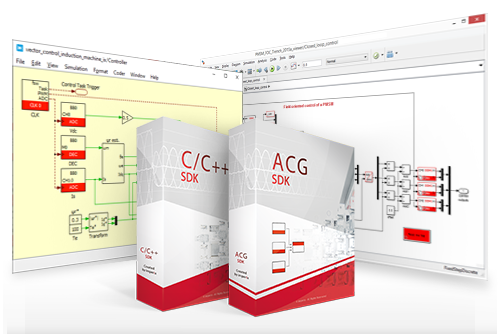
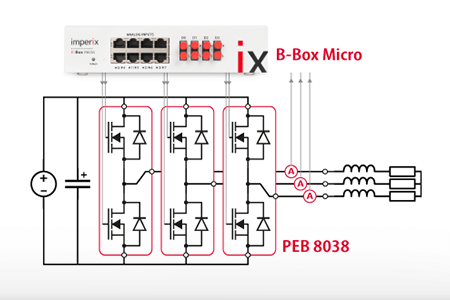
This article provides getting-started information for the B-Box Micro, highlighting the easy transition from computer simulation to laboratory testing. A practical “Hello World” example is…
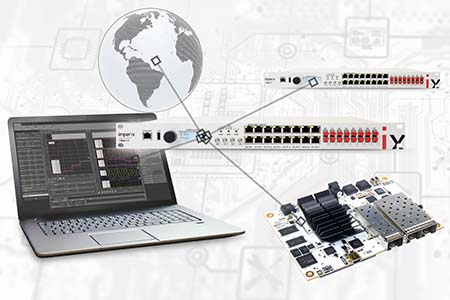
Imperix controllers support various means of communication that can be used among themselves or to exchange data with third-party devices/computers. In this context, the article…
The ADC block (or C++ routines) is used to access data from a given Analog-to-Digital Converter (ADC) channel. It also configures how this data is…
The CONFIG block primarily configures the main clock (CLK0) and its derivatives. Together, these clocks define the frequency and phase of the sampling events, as…
This note introduces a conventional control for Modular Multilevel Converters (MMC). The converter is used in a DC/AC inverter configuration and is connected to the three phase grid.
This notes covers the implementation of a high fidelity audio amplifier by means of a Modular Multilevel Converter (MMC).
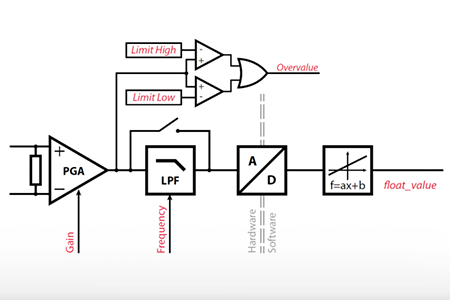
The B-Box 3 (RCP) has 16 identical analog input channels. The equivalent schematic of the data acquisition chain is shown below. Each channel consists of…
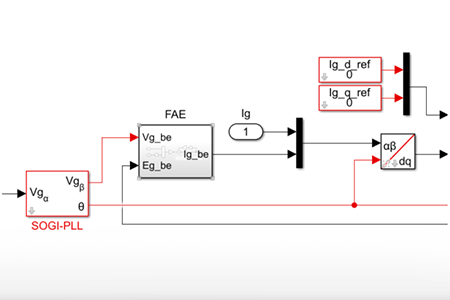
Fictive axis emulation is a vector control technique that is mostly used in single-phase inverter applications, where the second axis β of a rotating reference…
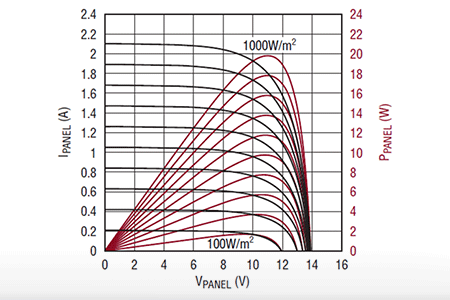
Some power sources, like solar panels, present power characteristics that strongly depend on the operating conditions. In such cases, Maximum Power Point Tracking (MPPT) is often applied to maximize the extracted power.
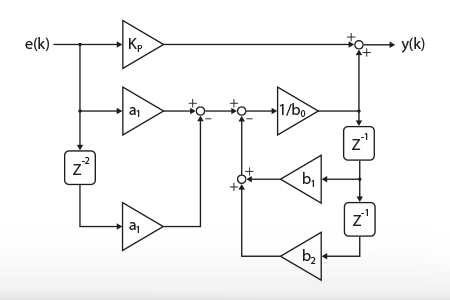
A proportional resonant control can be seen as the implementation of PI controllers within a rotating reference frame (dq), which allows to re-locate the infinite DC gain at desired frequency.
End of content
End of content