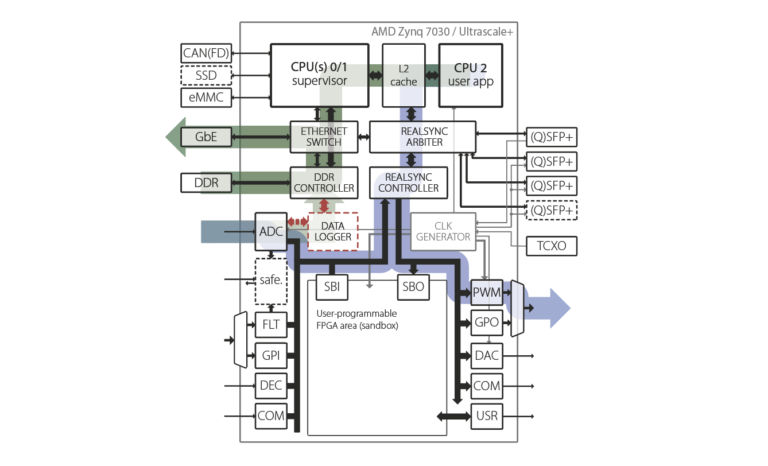
Operating principles of imperix controllers
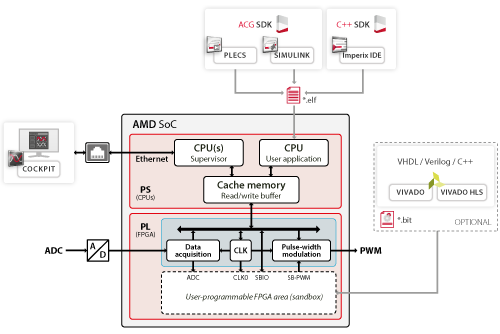
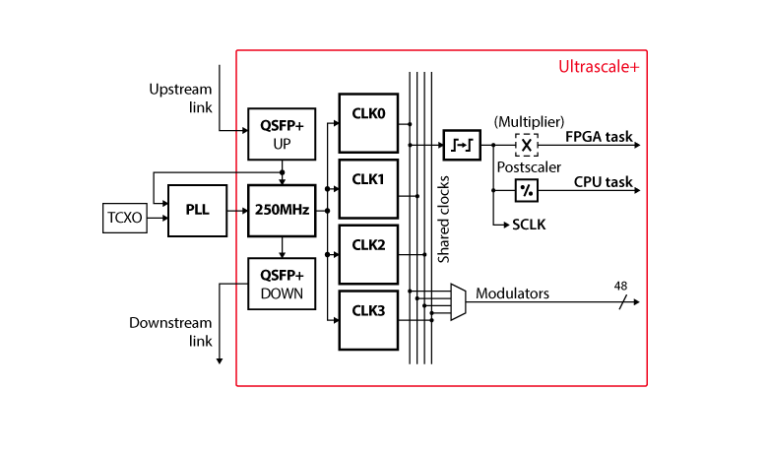
While highly intuitive to use, imperix controllers in fact rely on an internal architecture and operation that sometimes differs significantly from traditional DSPs, MCUs, and…
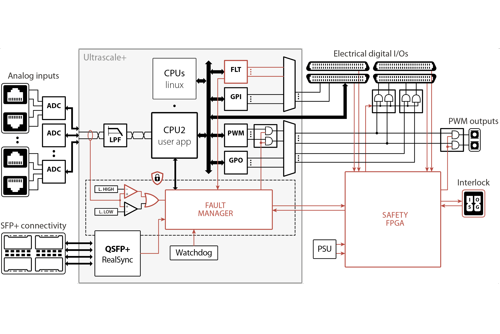
Imperix controllers possess protection mechanisms that operate fully independently from all software, i.e., independently from the user app CPU, the supervisor CPU, and the FPGA….
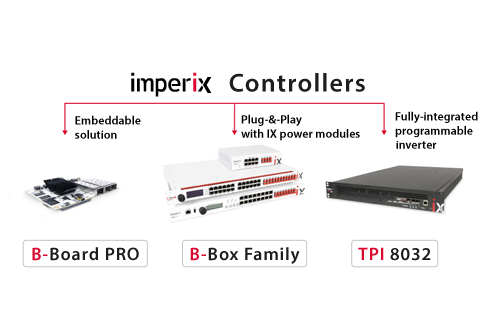
This article explores imperix’s portfolio of programmable controllers, highlighting how each device is optimized for specific power-electronics applications. Products presentation All imperix controllers use a…
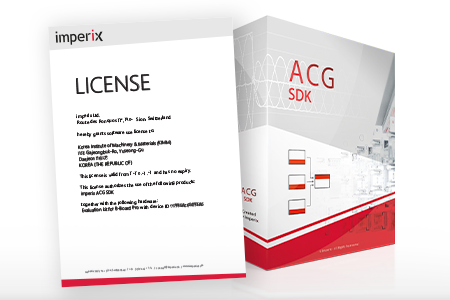
All imperix products subject to user programming from the ACG SDK or the CPP SDK require a software license. This concerns the B-Box controllers family…
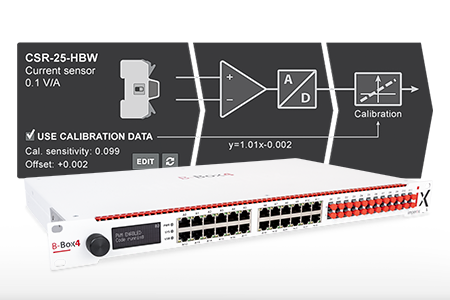
This article describes the auto-identification feature for imperix’s latest current and voltage sensors — including those embedded in power modules — when used with the…
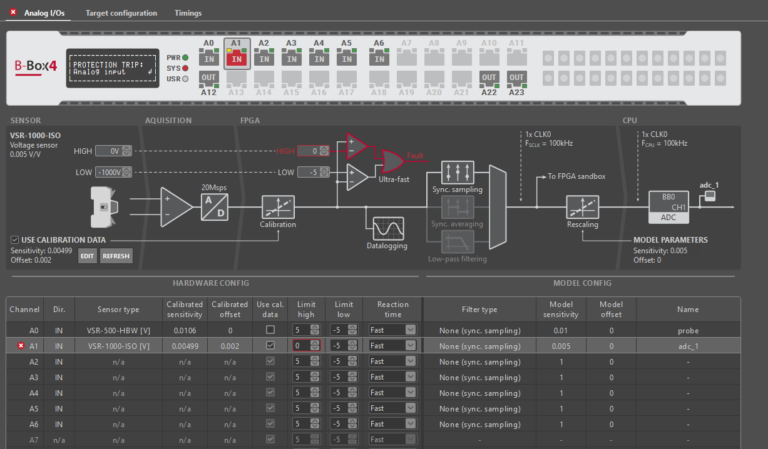
A total of 24 analog channels are available on the B-Box 4, all of which can be configured as either inputs or outputs. From the…
What is islanding detection? Islanding occurs when part of a power network, disconnected from the main grid, is solely powered by some Distributed Energy Resources…
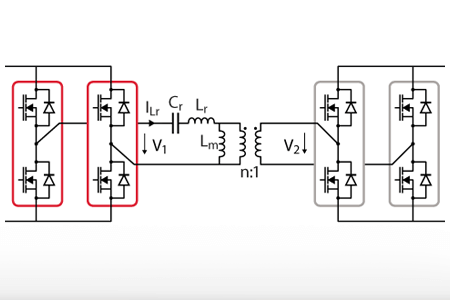
Thanks to its flexible output voltage range, the LLC resonant converter is a popular choice of topology for battery charger applications, such as onboard chargers…
Imperix converter controllers (e.g., B-Box family, B-Board PRO, and TPI) utilize various real-time communication protocols to enable coordination and interaction with external devices. In this…
This note introduces a conventional control for Modular Multilevel Converters (MMC). The converter is used in a DC/AC inverter configuration and is connected to the three phase grid.
End of content
End of content