FLT – Fault inputs
 SD008
SD008At the hardware level, FLT inputs are special-purpose digital inputs that can be configured to generate a “hardware fault” in order to instantly disable all PWM outputs…

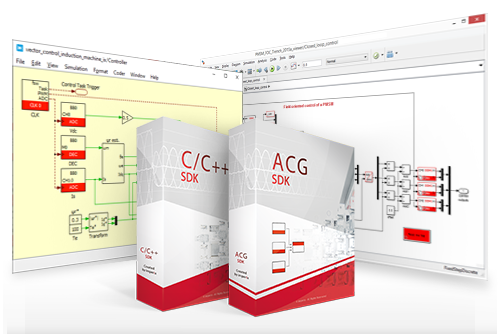
At the hardware level, FLT inputs are special-purpose digital inputs that can be configured to generate a “hardware fault” in order to instantly disable all PWM outputs…
Imperix controllers provide angle decoder (DEC) resources to decode quadrature-encoded signals produced by incremental encoders, which are widely used in motor drive applications. At the…
At the hardware level, GPO outputs are general-purpose digital outputs that can be configured for various purposes. This block and the associated C/C++ routines provide means to…
At the hardware level, GPI inputs are general-purpose digital inputs that can be configured for various purposes. This block and the associated C/C++ routines provide means to…
The DAC block, or its equivalent C++ routines, is used to apply a given value to one of the Digital-to-Analog Converter (DAC) channels of the…
The ADC block (or C++ routines) is used to access data from a given Analog-to-Digital Converter (ADC) channel. It also configures how this data is…
Imperix controllers feature 4 clock generators, CLK0, CLK1, CLK2, and CLK3, which can be freely configured as derivatives of the 250 MHz base clock. These…
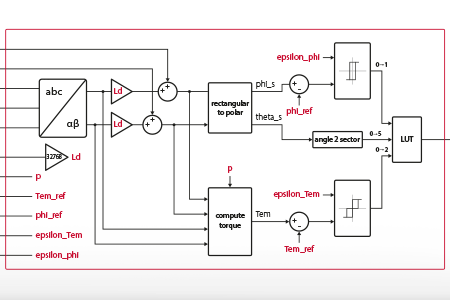
This technical note presents an FPGA-based Direct Torque Control (DTC) of a PMSM motor using Vivado HLS, coupled with the possibility to customize the FPGA…
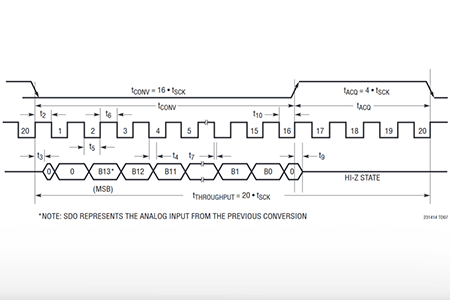
This technical note shows how an SPI communication link can be established between an FPGA and an external Analog-to-Digital Converter (ADC). The development setup will…
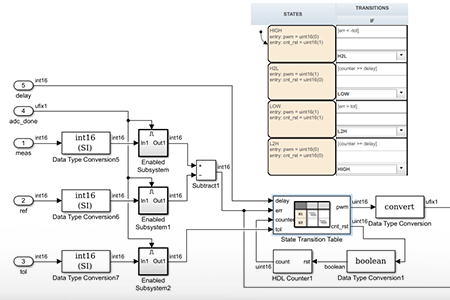
This technical note shows how the implementation of an FPGA-based hysteresis controller can be conducted, starting from the modeling stage, following with automated VHDL code…
End of content
End of content